
A legacy built on respect, partnership and shared prosperity
Last updated onArt is one of TC Energy’s earliest Indigenous leaders, whose career with the company began in the early 1980s. His journey reflects how TC Energy’s approach to Indigenous Relations has evolved: from early, values driven leadership above and beyond the regulatory process to a model grounded in cultural respect, genuine collaboration and shared economic benefit. Through his work, Art helped bring community perspectives into TC Energy’s approach—deepening our understanding of how to work alongside Indigenous communities and demonstrating that strong relationships lead to better outcomes for communities and projects.
“What we learned early is that regulations don’t create certainty—relationships do,” shared Art.
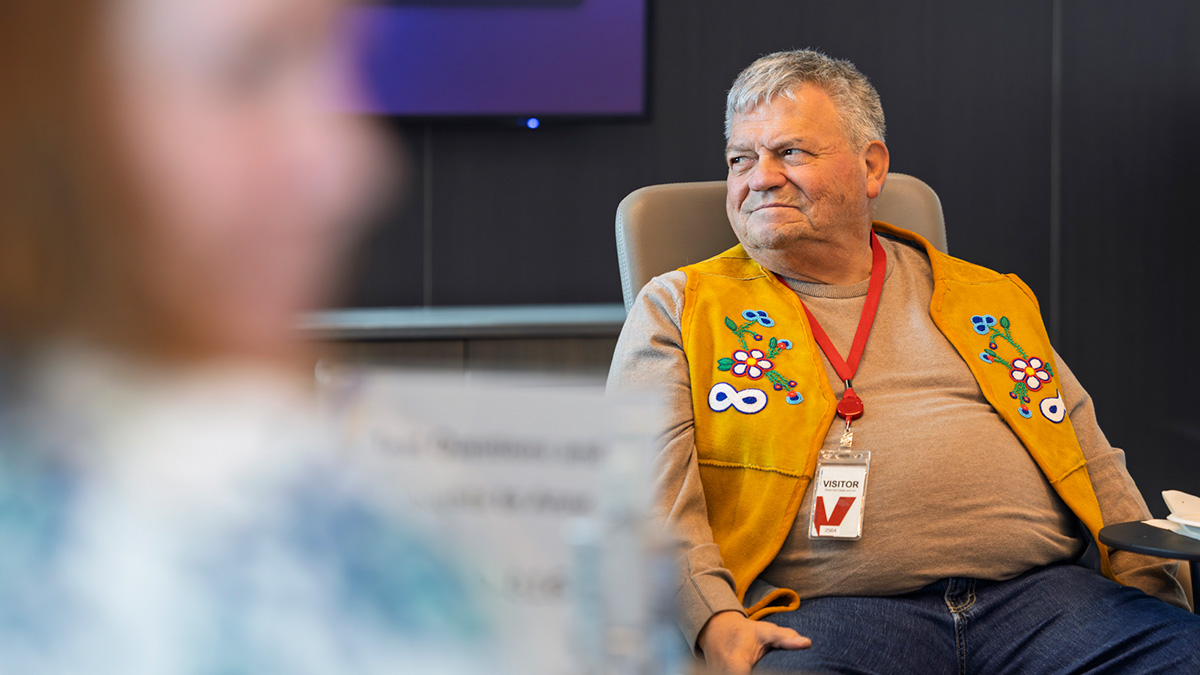
Art Cunningham.
Listening to understand, supporting what matters and continuously improving
In the 1980s, formal Indigenous Relations teams did not yet exist, but at NOVA (which merged in 1998 with TransCanada, now TC Energy), then-CEO Bob Blair saw the value Indigenous knowledge could bring to projects—and set a clear vision to increase Indigenous hiring and contracting.
That vision often came to life through individuals on the ground—people who could bridge perspectives, build trust and help translate concerns into practical solutions, like Art.
Art first discovered his passion for supporting Indigenous involvement in the resource sector when he led a meeting at the local Friendship Centre to address concerns related to employment on a project near Lac La Biche, AB. Although Art was working for the company as an electrician at the time, he was called in to support the discussion and act as a mediator, drawing on his Indigenous heritage and connection to the community.
Before the meal was over, the issues had been resolved and community members had been offered several jobs on the project. Not long after that, Art was asked to step into a new role: Native Liaison. There was just one catch: no job description. He would have to build the role. With no template to follow, Art shaped the role by listening first—building relationships with communities and creating space for their knowledge to guide the work.
“I never went into any community assuming I knew that community. The process of getting to know that community is the most important part of the relationship,” shared Art.
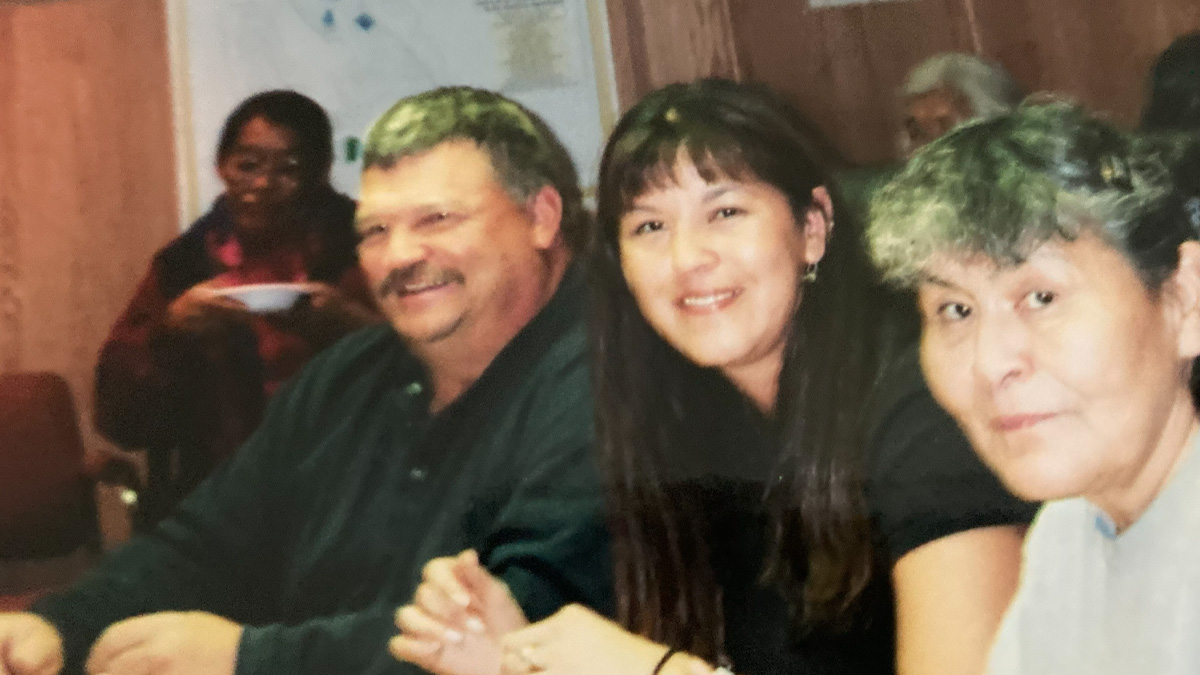
Art Cunnigham and his sister visiting Gwich’in Nation, 1994 .
Genuine collaborations and partnership in practice
Through Art’s work communities were asked what mattered to them, how projects intersected with their land and history, and what knowledge they could share. Elders spoke about waterways, wildlife patterns and seasonal changes that were not captured in technical studies. That Traditional Knowledge informed route planning and built trust.
“When I started going into communities, people would point out things on the land—like where a creek actually flows or how it changes seasonally. I would take that knowledge back to our engineers during planning. The information helped narrow down where to cross or how to route the pipeline. We were learning that traditional knowledge could meaningfully support and improve our technical work,” shared Art.
Today, that listening first approach remains central and continues to guide how TC Energy works with communities across its footprint.
Building on this success and developing new ways to hire locally, address barriers and support success on the job, Art was able to create TC Energy’s first Indigenous Hiring Program, an early version of what is now TC Energy’s Hire & Buy Local program.
“The company decided to put Indigenous hiring directly into the contracts. Contractors would be required to hire local Indigenous people. At the time, this was completely new. Nobody had ever seen anything like it before. There was no model to follow and nobody really knew how to do it. My role was helping the company figure out how to actually implement the program,” shared Art.
Over time, collaboration expanded beyond employment into long term relationships based on transparency and consistency. Relationships were built face to face, problems were solved together, and mistakes became opportunities to learn. The result was stronger relationships and projects shaped by shared understanding and the beginning of local Indigenous hiring programs across the industry.
“I experienced the success of a relationship between a resource sector company and community, how it benefits the community and the benefits to industry of true collaboration,” shared Art.
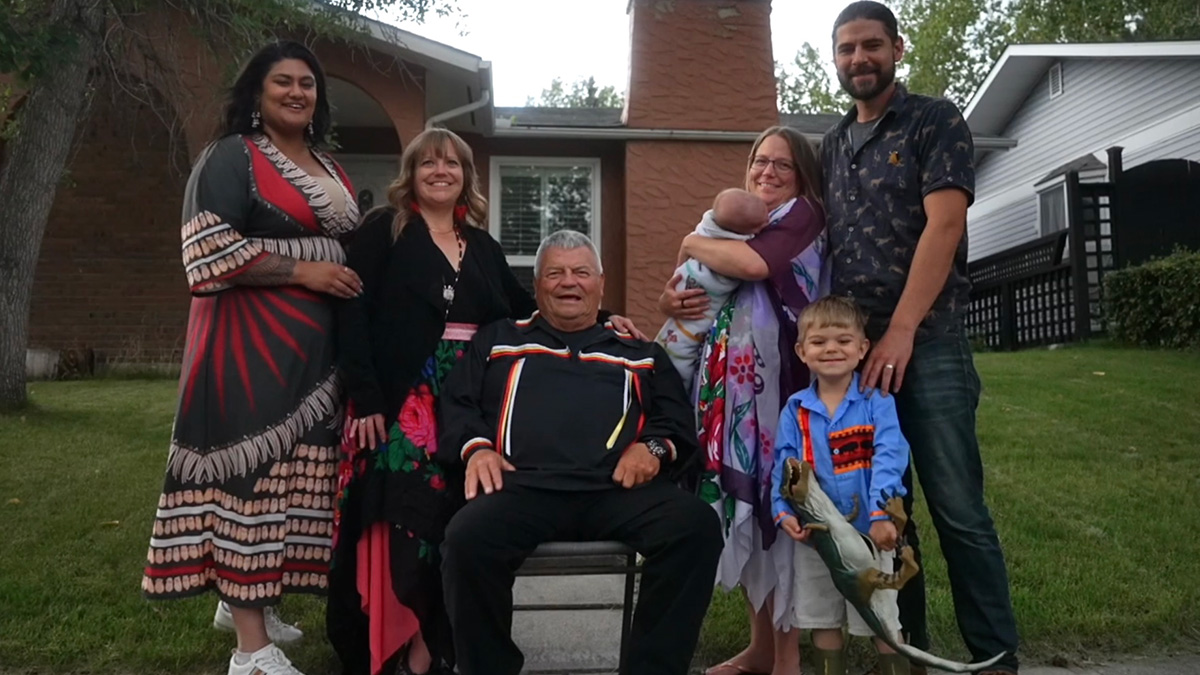
Art and his family.
Advancing prosperity and shared benefit
One experience never left Art. After a project created jobs for men in a northern Alberta community, he was called back for an unexpected meeting with police and social workers. They wanted to talk about what had changed. That Christmas, the community had seen fewer crises than usual. For Art, it was a powerful reminder that access to work and opportunity could have effects far beyond the job itself.
“That project changed things. For the first time, the community had a peaceful Christmas—no calls, no incidents. That’s when I knew this work was more than a job. It gave people a tool to get out of their own challenges,” shared Art.
Looking ahead | A foundation for Canada’s energy future
Today, Indigenous involvement is a central part of major project development across Canada. That progress has been shaped over decades through relationship building, shared learning and leadership—including contributions from champions like Art. Experience has reinforced that projects are stronger when they are developed alongside Indigenous communities—drawing on their knowledge, perspectives and deep connection to the land.
As industry continues to listen and learn, TC Energy’s focus remains clear: respect Indigenous cultural values, collaborate transparently and support economic prosperity that lasts. The goal is not just successful projects, but strong, enduring relationships that support shared success—where those most impacted benefit the most.
“I’m proud of the seeds we planted and where things are today. What matters most is seeing how those ideas have grown into something bigger than any one person,” shared Art.